












Castagnaccio
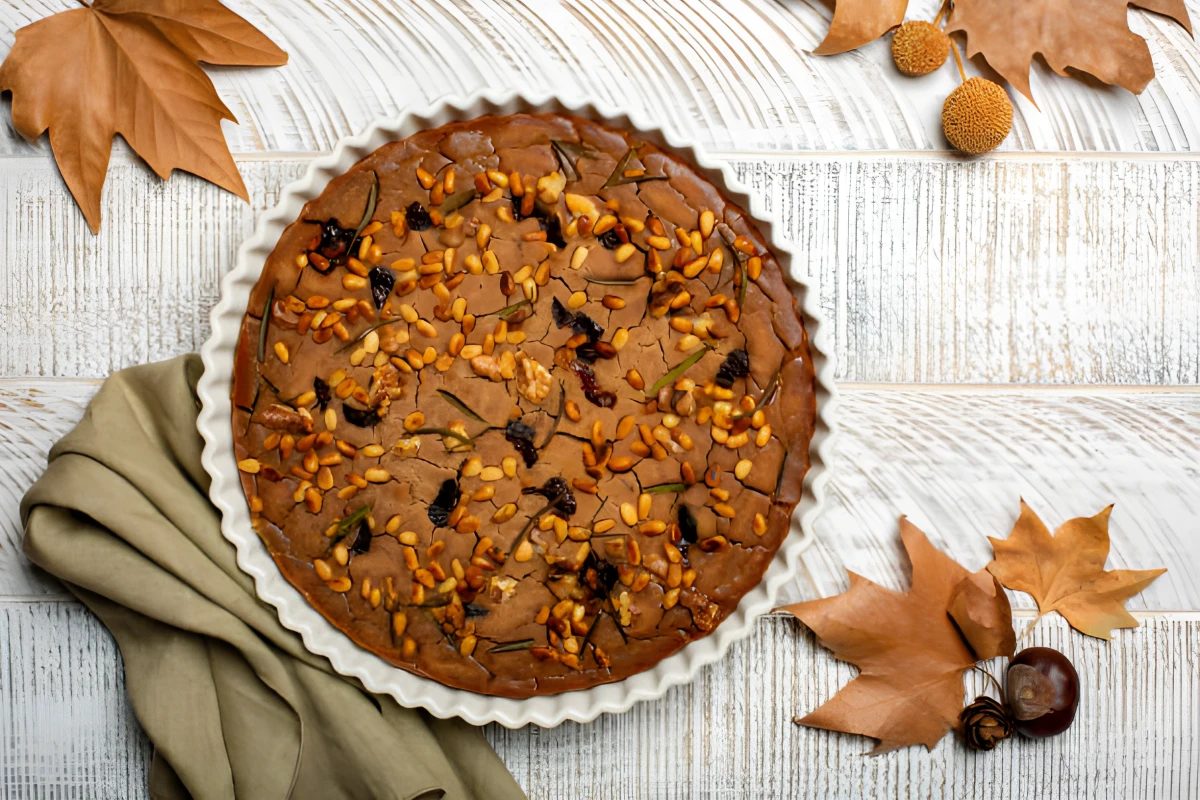
This traditional Tuscan castagnaccio recipe celebrates the rustic, woodsy flavor of autumn chestnuts, enhanced by the sweetness of raisins and the fragrance of rosemary. This flat, gluten-free cake is enjoyed warm at snack time or as a dessert with a spoonful of fresh ricotta.
- Total time
- 50 min
- Prep
- 15 min
- Cook
- 35 min
- Rest
- 10 min
- Difficulty
- Easy
- Per person
- €1.80
 By the CookinBreak team
Ingredients 8
Estimated cost €10.80
For the batter
For the topping
Equipment
 Whiskstainless steel
 Bowlto soak the raisins
 Sievefine mesh
- Fluted tart pan28 cm diameter, fixed or removable bottom
Instructions
Tap a number to check off the step, and a time to start a timer.
Cook it your way
Your account checks every recipe against your allergies and diets, keeps your favorites and builds your shopping lists.
It's free · sign up in 30 seconds · I already have an account
Enjoy your meal!
Made it? Your rating helps other cooks.
Goes well with
🎅 Christmas: all recipes

Nutrition facts
per serving · estimate- Protein5 g6%
- Carbs45 g51%
- Fat17 g43%
- Fiber5 g


Share of each nutrient in the calories of one serving.
Good to know
Chef's tip
For an authentic castagnaccio, be sure to use a wide pan so the batter is never more than one centimeter thick. It is this low height, combined with a drizzle of olive oil on top, that creates the signature crackled crust contrasting with the dense center.
Freezing : Can you freeze this recipe?
YesFreezes very well, up to 3 months in cooked portions wrapped in plastic.
Storage : How long does it keep?
Keeps 4 to 5 days in an airtight container in a cool place.
Making ahead : Can you make it the day before?
YesBatter can be made the day before; the flavors develop as it rests.
Reheating : How do you reheat it?
Oven 5 min at 160°C or skillet. Microwave not recommended, rubbery texture.
Variations
- Zest-scented version: add the finely grated zest of an unwaxed orange to the batter for a warm citrus note.
- Wild fennel version: replace the rosemary sprigs with half a teaspoon of wild fennel seeds, a very popular variation on the Tuscan coast.
- Indulgent dessert wine version: soak your raisins in vin santo or a sweet white wine instead of warm water.
Mistakes to avoid
- Forgetting to sift the flour: chestnut flour clumps very quickly and forms stubborn lumps that are impossible to work out without sifting first.
- Using a pan that is too small: a thickness greater than 1.5 cm gives a texture that is too compact and pasty instead of a thin, fudgy cake.
- Adding granulated sugar: ripe chestnut flour and raisins naturally provide all the sugar needed to balance the cake.
Frequently asked questions
Why is there no yeast or sugar in castagnaccio?
Chestnut flour naturally contains a high level of carbohydrates that sweeten the batter without any outside addition. Leaving out the leavening preserves the dense, fudgy consistency typical of this ancestral peasant recipe.
How can I tell if the castagnaccio is perfectly baked?
The cake is ready when its whole surface has a nice hazelnut-brown color crossed by a dense network of fine cracks, while the pine nuts are delicately golden without being burnt.
Can I replace fresh rosemary with dried rosemary?
Dried rosemary burns very quickly under the direct heat of the oven and becomes unpleasantly brittle to bite into. It is therefore strongly recommended to use fresh needles, which release their essential oils.
What is castagnaccio traditionally served with?
In Tuscany, this cake is traditionally enjoyed warm with a spoonful of very fresh sheep's milk ricotta and a glass of vin santo or a young local red wine.
Reviews
Did you make it?
Tap the stars: your rating helps others get started.
You might also like
All “Baking & Pastry” recipes
Popular right now


Castagnaccio
Step 1 of 10
- 2 ¾ cups chestnut flour
- 1 ⅔ cups water
- 1 pinch of salt
- 2 ¾ tbsp olive oil
- ⅓ cup raisins
- ⅓ cup pine nuts
- ⅓ cup walnut halves
- 2 rosemary