










Freezing : Can you freeze this recipe?
Not recommendedCooked scrambled eggs turn rubbery or watery after thawing.
Estimated cost €0.80
 Whisk
 Nonstick skillet
 Wooden spatula
Tap a number to check off the step, and a time to start a timer.
5 more steps to nail this recipe
Create your free account and see the full recipe, with exact times and timers.
It's free · sign up in 30 seconds · I already have an account
Enjoy your meal!
Made it? Your rating helps other cooks.


Share of each nutrient in the calories of one serving.
Chef's tip
For an even more intense flavor, you can lightly sauté the chives in the skillet before adding the eggs to release all their aroma! 🌿
Cooked scrambled eggs turn rubbery or watery after thawing.
Not suited to batch cooking. Texture and flavor degrade significantly.
You can prep the ingredients ahead, but cook at the last minute for the best texture.
Microwave at medium power (500W) in short bursts (30-45 sec), stirring between each. Or in a pan over very low heat, with a spoonful of water or milk, stirring constantly. The texture will be altered, rubbery or dry.
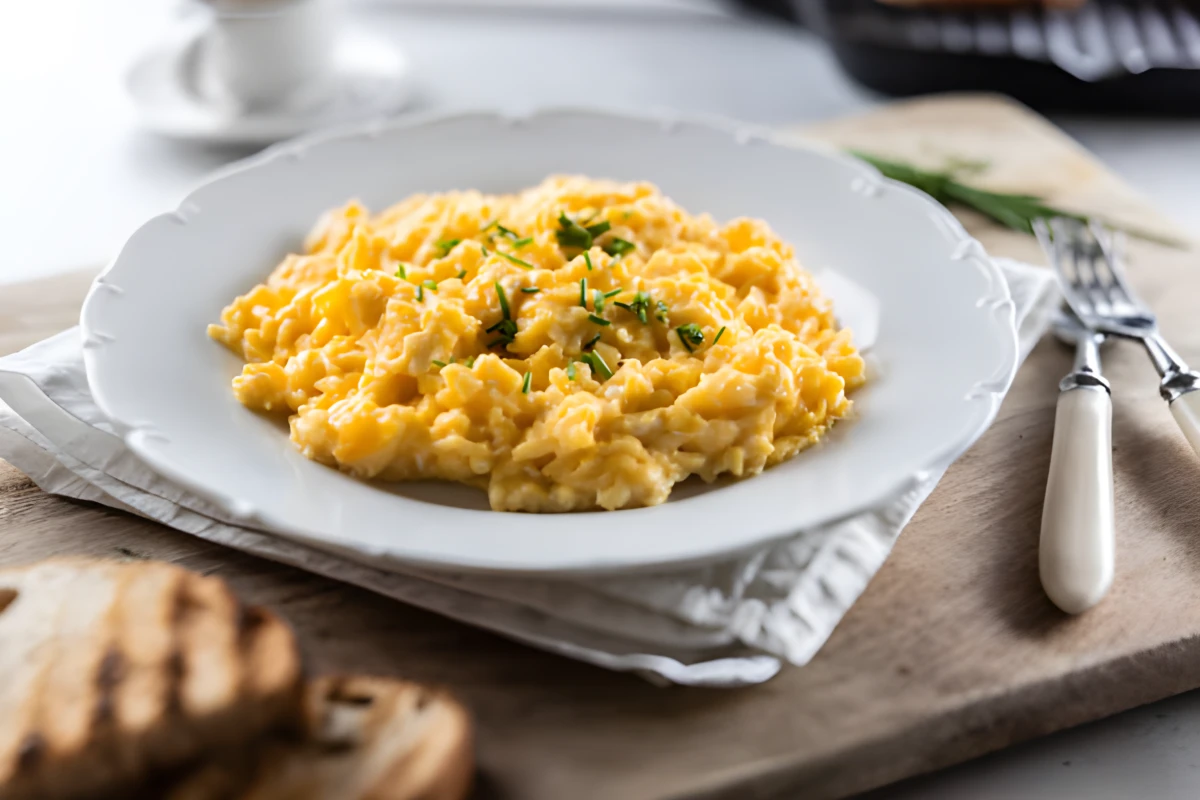
Whisk the eggs with the milk, salt and pepper, pour into a skillet over medium heat and stir gently with a spatula, scraping the edges. Remove from the heat when they are cooked but still slightly soft.
Yes, a tablespoon of milk for two eggs is beaten in with them, along with the salt and pepper, until the mixture is smooth. The milk helps make fluffy scrambled eggs.
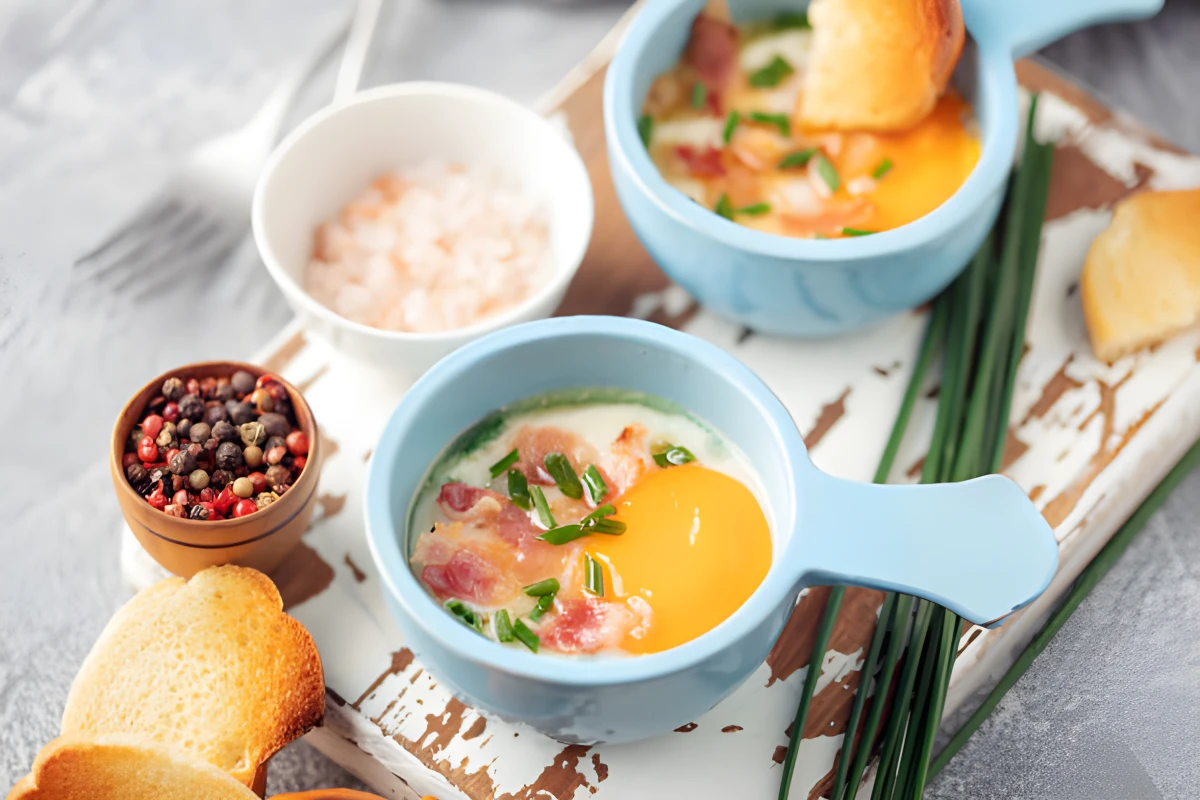
Add the chopped fresh chives when the eggs start to set, then keep stirring until they reach the doneness you like. You can top with a little extra chives when serving.
Plan on about 5 minutes of cooking over medium heat, stirring constantly. Depending on your taste, the texture will be soft or more set: stop cooking sooner or later.
Did you make it?
Tap the stars: your rating helps others get started.
Scrambled Eggs
Step 1 of 6
For this step