




















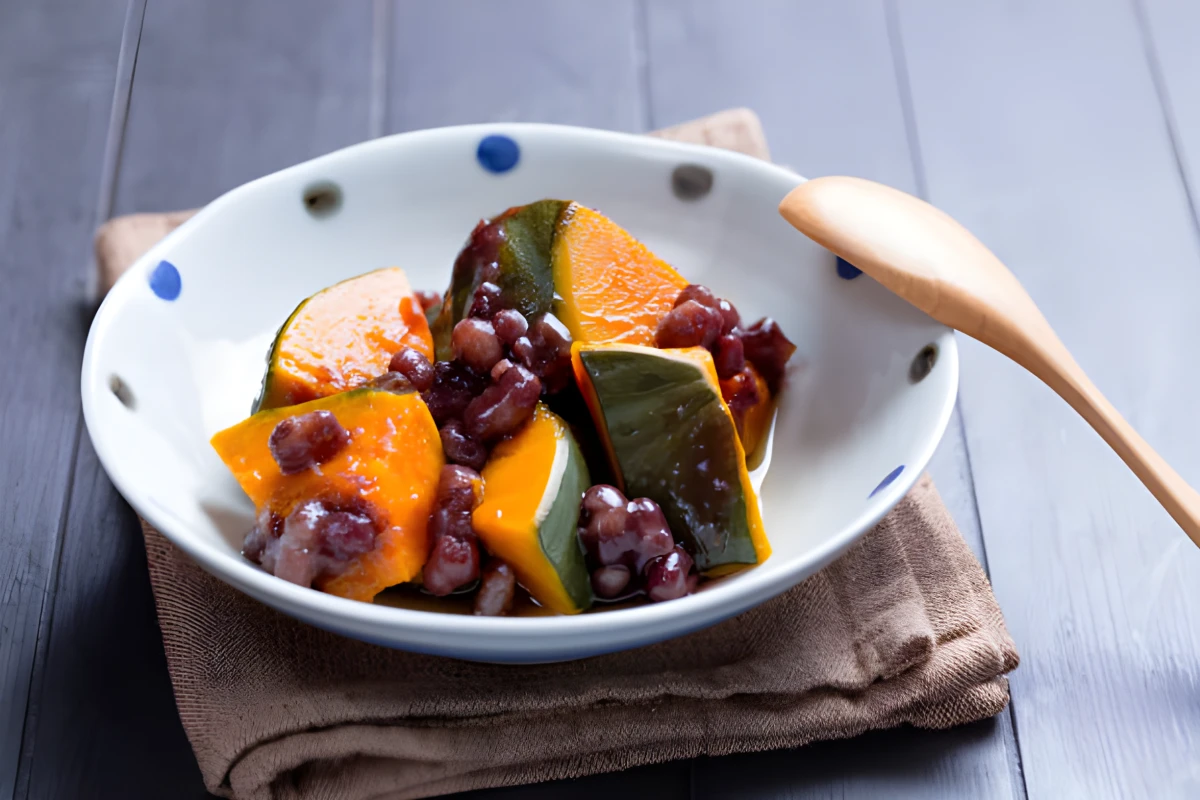
Kabocha
Indulge in simmered kabocha squash, a traditional Japanese recipe called itoko-ni, which pairs the sweet tenderness of the squash with red azuki beans. Served warm as a side dish, it is lovely over a bowl of hot white rice and brings a comforting autumn note to your table.
- Total time
- 35 min
- Prep
- 15 min
- Cook
- 20 min
- Rest
- 10 min
- Difficulty
- Easy
- Per person
- €0.35
 By the CookinBreak team
Ingredients 7
Estimated cost €1.40
Equipment
 Saucepanthick-bottomed and wide enough to lay the pieces flat
 Wooden spoonto stir gently without crushing the vegetables
- Chef's knifesharp enough to cut through the thick skin
- Tight-fitting lidotoshibuta or a sheet of parchment paper with a hole cut in the center
Instructions
Tap a number to check off the step, and a time to start a timer.
Remove the seeds from the squash with a spoon, then cut it into large, even cubes about four centimeters on each side.
Come back to this recipe anytime
With your free account: your saved recipes, shopping lists in 1 click and allergy alerts.
Lightly bevel the sharp edges of the skin on the squash cubes with a knife to keep them from falling apart as they simmer.
Arrange the squash pieces in the bottom of the pot, placing the green skin against the bottom for even cooking.
Pour the water, sugar and mirin into the pot, then bring the liquid to a boil over medium heat.
Place a drop lid directly on the vegetables, reduce to low heat and let simmer for ten minutes.
Gently add the soy sauce, salt and drained red beans around the pieces of squash.
Put the drop lid back on and continue cooking at a gentle simmer for eight to ten minutes, until the blade of a knife slides into the flesh without resistance.
Turn off the heat and let the dish rest in the covered pot for ten minutes so the flavors infuse before serving warm.
A recipe worth making again?
Save it to your recipe box and find it on all your devices. It's free.
Enjoy your meal!
Made it? Your rating helps other cooks.
Goes well with
🎅 Christmas: all recipes


Nutrition facts
per serving · estimate95kcal
- Protein3 g13%
- Carbs18 g77%
- Fat1 g10%
- Fiber3 g


Share of each nutrient in the calories of one serving.
Good to know
Chef's tip
The Japanese technique called mentori involves lightly shaving off the sharp edges of the squash skin. This simple step reduces friction between the pieces while simmering and keeps the tender flesh from crumbling into the broth.
Freezing : Can you freeze this recipe?
YesCan be frozen cooked for up to 2 months, the squash softens slightly.
Storage : How long does it keep?
Keeps 4 to 5 days in an airtight container in the fridge.
Making ahead : Can you make it the day before?
YesIdeal the day before, the simmered flavors soak in even better.
Reheating : How do you reheat it?
Reheat in a saucepan over low heat with a splash of water, or in the microwave at 600W for 2 minutes.
Variations
- Dashi version: replace the water with bonito or kombu dashi broth for a more pronounced umami depth.
- Kabocha-and-red-kuri version: substitute a very dense red kuri squash for the kabocha if you can't find it at an Asian market.
- Pure kabocha version: make the dish without the red beans (classic kabocha no nimono) and slightly increase the amount of squash.
Mistakes to avoid
- Peeling off all of the green skin, which helps the pieces hold their shape and adds an essential contrast in texture.
- Cooking at a rolling boil, which would break up the tender flesh of the squash before the broth reduces properly.
- Skipping the resting time off the heat, which is essential for the squash to absorb the sweet and salty juices without drying out.
Frequently asked questions
Can kabocha squash be replaced with another squash?
Red kuri squash is the best alternative thanks to its dense, low-moisture flesh and naturally sweet flavor. Butternut squash contains more water and could become too soft while simmering.
What is an otoshibuta and what can replace it?
It is a Japanese drop lid, smaller than the pot, that rests directly on the food. It prevents a violent boil and spreads the heat evenly. A simple disc of parchment paper with a hole cut in the center does the job perfectly.
Should I use dried or already cooked azuki beans?
This recipe uses azuki beans that are already cooked, unsweetened and plain, to save time. If you are starting with dried beans, precook them separately in water until tender before adding them.
Is the dish served hot or cold?
The simmered squash is best enjoyed warm or at room temperature. Resting lets the flesh soak up the seasonings, revealing all the subtle nuances of the broth.
Reviews
Did you make it?
Tap the stars: your rating helps others get started.
You might also like
All “Cooking” recipes


Popular right now






Kabocha
Step 1 of 8
Remove the seeds from the squash with a spoon, then cut it into large, even cubes about four centimeters on each side.
For this step
- 2 ¾ cups squash
- ¾ cup kidney beans
- 1 cup water
- 1 ½ tbsp soy sauce
- 1 tbsp mirin
- 1 tbsp sugar
- 1 pinch of salt