


















Traditional Korean Bibimbap
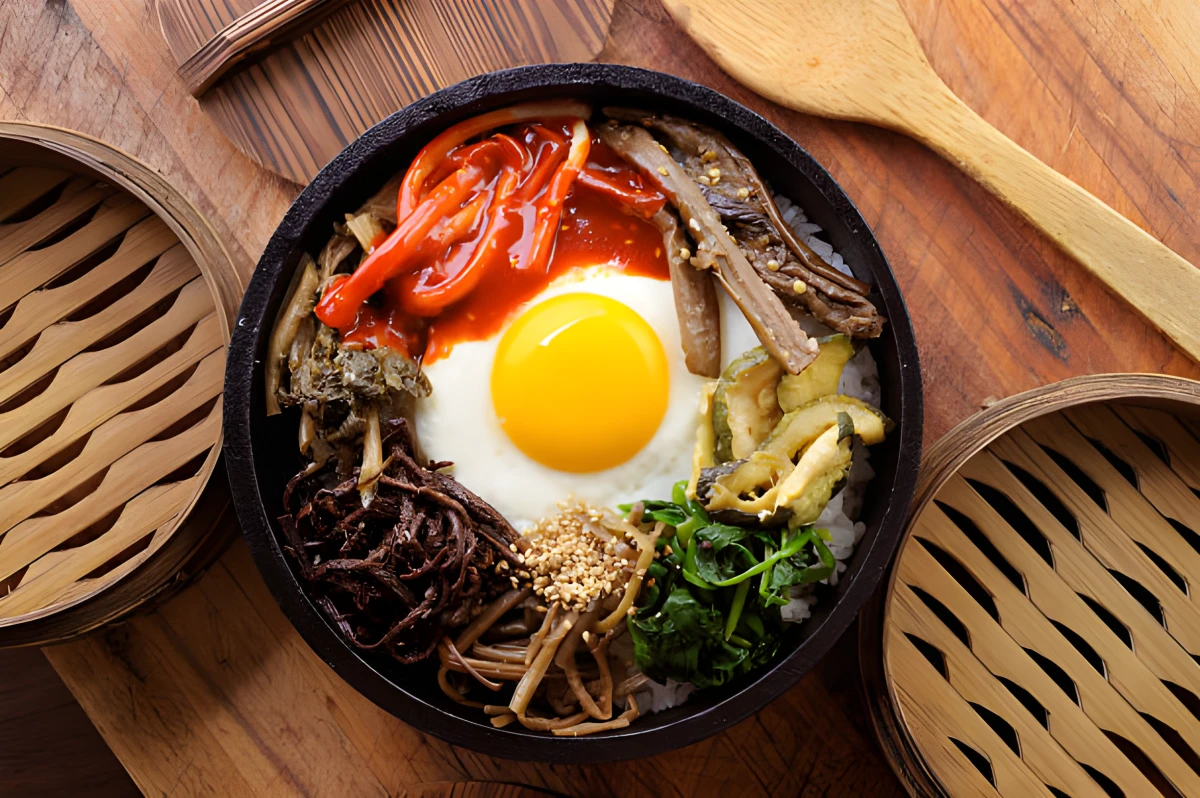
A traditional, complete Korean dish made with rice, seasoned sautéed vegetables, beef, a fried egg and spicy gochujang sauce. Each ingredient is prepared separately, then arranged in a bowl and mixed together just before eating.
- Total time
- 1 h
- Prep
- 40 min
- Cook
- 20 min
- Difficulty
- Medium
- Per person
- €1.25
 By the CookinBreak team
Ingredients 17
Estimated cost €5.00
Equipment
 Skillet
 Saucepan
 Bowl(for prep)
- Bowlideally a dolsot
 Kitchen knife
 Cutting board
 Colander
Instructions
Tap a number to check off the step, and a time to start a timer.
7 more steps to nail this recipe
Create your free account and see the full recipe, with exact times and timers.
It's free · sign up in 30 seconds · I already have an account
Enjoy your meal!
Made it? Your rating helps other cooks.
Goes well with
🎅 Christmas: all recipes


Nutrition facts
per serving · estimate- Protein30 g19%
- Carbs70 g45%
- Fat25 g36%
- Fiber7 g


Share of each nutrient in the calories of one serving.
Good to know
Chef's tip
For a crispy bibimbap, serve it in a dolsot (hot stone bowl) and let the rice crisp up at the bottom for a few minutes before mixing everything together. It adds a unique, much-loved texture.
Freezing : Can you freeze this recipe?
YesSome components (rice, cooked beef, cooked vegetables without eggs) freeze very well for up to 2 months in zip bags. The egg does not freeze.
Storage : How long does it keep?
If the egg is hard-boiled or fried, keeps 2 days max in an airtight container in the fridge. If the egg is raw or soft-boiled, 24 hours max.
Making ahead : Can you make it the day before?
YesThe components (rice, sautéed vegetables, marinated beef) can be prepared the day before and assembled just before serving. Store separately in the fridge.
Reheating : How do you reheat it?
Microwave (medium power, 2-3 min, add a spoonful of water) to prevent drying out. Saucepan (low heat, covered, add a little water/broth). Oven/Air fryer not recommended, as they dry out the ingredients and alter the textures.
Variations
- Adjust the amount of hot sauce to taste.
- Sprinkle with toasted sesame seeds.
- Mix everything together in the bowl just before eating.
Mistakes to avoid
- Leaving water in the spinach: squeeze it out after blanching.
- Cooking all the vegetables together: sauté them separately.
- Overcooking the egg: the yolk should stay runny.
Frequently asked questions
How do you prepare the beef for bibimbap?
Mix the thinly sliced beef with the soy sauce, sesame oil, garlic, sugar and black pepper, then stir-fry it in a large skillet over high heat before setting it aside.
How do you prepare the vegetables?
Blanch the spinach for one minute, then squeeze it dry and season it with sesame oil. Sauté the carrots, julienned zucchini and sliced mushrooms separately with a little vegetable oil.
How do you serve bibimbap?
Place hot rice in each bowl, arrange the beef and each vegetable around it in colorful sections, add the fried egg, drizzle with hot sauce and sprinkle with toasted sesame seeds.
How do you make the dipping sauce?
Mix the gochujang-style hot sauce with the remaining sesame oil, the rice vinegar and a little granulated sugar to balance the flavors, then drizzle it over the dish to taste.
Reviews
Did you make it?
Tap the stars: your rating helps others get started.
You might also like
All “Cooking” recipes
Popular right now




Traditional Korean Bibimbap
Step 1 of 8
For this step
- 1 ½ cups white rice
- 14 oz beef
- 10 cups spinach
- 1 ½ cups carrots
- 1 ⅔ cups zucchini
- 2 ¾ cups button mushrooms
- 2 tbsp sesame seeds
- 2 tbsp sesame oil
- 2 tbsp vegetable oil
- 4 cloves of garlic
- ¼ cup soy sauce
- 2 tbsp granulated sugar
- 4 eggs
- 1 pinch of black pepper
- 1 tsp salt
- ¼ cup hot sauce
- 1 tbsp rice vinegar